Jane and John Get Engaged and Married
Mr. & Mrs. SmithJane and John’s engagement and marriage turn a six-week courtship into a binding partnership, but the story makes their vows carry two meanings at once: a promise of intimacy and the beginning of a life whose apparent domestic normality conceals danger. A champagne toast, a pale-blue ring box, and a hurried courthouse ceremony establish the romance; later, the couple’s small household grievances and spectacular violence expose how little safety the marriage guarantees.
From Bogotá to the River Café
Six weeks after Jane and John met in Bogotá, Jane admits to being afraid as John invites her to dinner at an upscale restaurant. Her fear is not explained as simple reluctance: the speed of the relationship itself makes the evening feel consequential. John asks her to dress nicely, and when her high heels make walking impractical, he suggests a taxi. Jane privately suspects that the ride recalls their first evening in Bogotá, linking the new courtship to the circumstances of their first meeting.
At the River Café, Jane proposes celebrating their friendship with tequila. John orders champagne instead, explaining that champagne is for a celebration. The shift from friendship to something more serious is registered in Jane’s response: she smiles, then blinks away sudden tears. The scene makes the proposal emotionally legible before the ring appears. What Jane had named as friendship is already becoming a commitment neither of them treats casually.
The Proposal and Its Promise
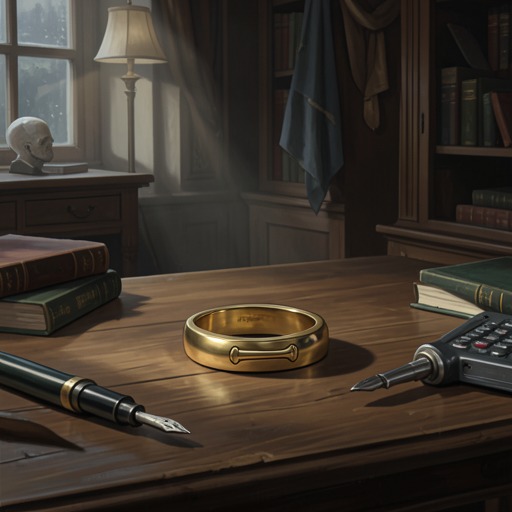
John reaches into his pocket, and Jane first assumes he may be looking for a pen or a cigarette. Instead, he produces a small, light-blue box associated with Tiffany’s and opens it without speaking. He slides a ring onto Jane’s left hand, and the moment is described as if the whole world were suddenly radiant. The proposal is a deliberate surprise, but its significance rests less on elaborate speech than on the physical act of placing the ring on her hand.
Jane’s account casts the gesture in expansive, romantic terms: John has given her the stars and a night that seems capable of lasting forever. That idealized scale contrasts with the brevity of their courtship. The six-week interval is not hidden or softened; it is the measure of how quickly their attachment becomes a formal promise. The proposal therefore serves both as a romantic culmination and as a leap into a future whose practical and personal risks the couple have not yet confronted.
A Hasty Courthouse Wedding
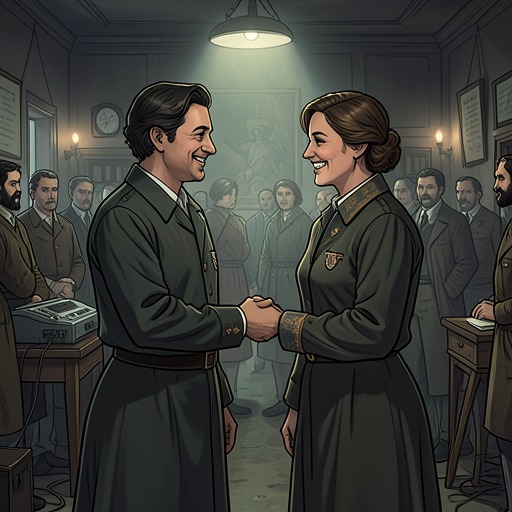
Jane and John marry at city hall because they have no time for a larger celebration. Jasmine serves as Jane’s witness, while John’s friend Eddie stands for him. Both witnesses appear furious, but the couple are so absorbed in the ceremony that they scarcely notice. The wedding is intimate by necessity rather than by design, and its haste gives the occasion an improvised quality.
When John places the ring on Jane’s finger, both their hands tremble. Jane’s face shines, and the ceremony’s formal declaration that they are now Mr. and Mrs. Smith gives the marriage a public name. John finds the sound of the new shared identity beautiful. The official words are followed by the invitation to kiss the bride; the account trails off at that point, leaving the ceremony’s emotional force in the gesture rather than turning it into a prolonged celebration.
For Jane, the ring means more than a wedding convention: it is the first time anyone has promised her something. That admission explains why the trembling hands matter. The vows are not simply a convenient finish to a swift romance; they answer a deep personal absence. At the same time, the witnesses’ anger and the couple’s decision to proceed despite it mark the marriage as an act made under pressure, not a settled, leisurely beginning.
The Marriage in Everyday Life
The later domestic scenes set the remembered romance against the friction of shared routines. John brings home salted butter when Jane wanted unsalted butter. He recognizes the mistake and tries to apologize, but Jane waves the apology away and says she will improvise. The exchange is small, yet it exposes the gap between a request and the result, and between John’s attempt to make things right and Jane’s dissatisfaction. His inward comparison of himself to a suffering knight assigned an impossible task turns household shopping into comic marital warfare.
That mundane mismatch sits beside the marriage’s grand beginning without cancelling it. The couple once read a ring and a trembling hand as evidence of a promise; later, even a grocery errand can feel like a test neither knows how to pass. The contrast gives their courtship and wedding a retrospective edge: the promise is real, but it does not automatically produce understanding or ease.
Romance Against the Violence to Come
The story’s later action repeatedly collides with the marriage’s domestic imagery. A grenade drops through a ventilation opening and rolls across the floor, looking almost like a toy from a Happy Meal. The harmless scale suggested by its appearance is immediately contradicted by the danger it poses. Elsewhere, John fires through the kitchen as Jane watches her treasured room come apart: glasses shatter, cupboards fly open, and her carefully kept teapot and its matching kettle are hit. The kitchen that belongs to their shared home becomes a field of destruction.
Even amid pursuit, the couple’s movement through a home-goods store carries the same collision of ordinary and lethal registers. Hiding in a bin filled with teddy bears, they see Homey, the store’s life-sized mascot, emerge wearing a house-shaped hat and carrying a sawed-off shotgun. Jane and John each shoot him in the oversized padded head, and his weapon blasts the ceiling as he falls. A confrontation that was supposed to be a skirmish with an undercover agent becomes a public incident. The domestic objects and cheerful retail setting do not soften the violence; they make the couple’s double existence more visible.
Read alongside the proposal and courthouse wedding, these later scenes revise the meaning of the couple’s commitment without erasing its tenderness. The marriage begins in champagne, a ring, and a promise Jane has never previously received; it continues among failed errands, wrecked rooms, and sudden gunfire. Its decisive significance lies in that unresolved contrast: Jane and John have made a genuine bond, but the story tests it in a world where neither romantic ceremony nor the idea of home can keep danger outside.